


Essential Fall Prevention Gear for Workers at Height in Australia and Western Australia
Key Australian Standards for Fall Prevention Equipment
Before selecting equipment, it's important to understand the regulatory framework. Australian Standards (AS) provide guidelines to ensure the safety and reliability of fall prevention gear:
AS/NZS 1891 series: Covers industrial fall-arrest systems and devices, including harnesses, lanyards, and anchorages.
AS/NZS 5532: Specifies requirements for the manufacturing and testing of anchor devices.
Work Health and Safety (WHS) Regulations: Mandate risk assessments and the use of appropriate fall-prevention measures.
Compliance with these standards ensures equipment is tested for strength, durability, and performance under Australian conditions.
Essential Fall Prevention Gear
Full-Body Harness
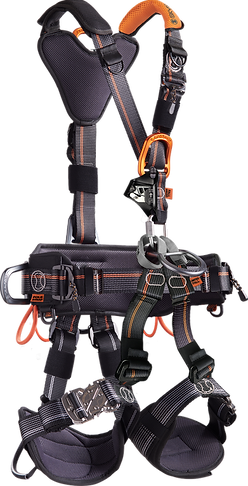
A full-body harness is the cornerstone of fall arrest systems. It distributes the force of a fall across the body to reduce injury—and can be life-saving for people who work at heights.
We recommend a correctly fitted, full-body harness. Since workers perform specific roles, there's no single right harness even for those assigned to the same job site. Users should connect the fall-arrest line to the attachment point that provides the best protection for the situation.
When selecting a harness:
Choose one compliant with AS/NZS 1891.1
Ensure it fits snugly; adjustable straps help achieve a proper fit
Look for padded shoulder and leg straps for comfort during extended use
Check for quick-connect buckles for ease of donning and doffing
Try on several options to determine the right choice for comfort and safety
Harness Inspection Checklist:
Hold the harness up by the D-ring
Straps should bend in an inverted "U" shape
Check for broken fibres, cuts, or pulled stitches
Inspect D-rings and metal wear pads for breaks or distortions
Ensure the D-ring bar sits at a 90-degree angle and pivots freely
Check buckle and D-ring attachments for unusual wear
Verify rivets are firm, flat, and not bent
Lanyards and Energy Absorbers
Lanyards connect the harness to an anchor point and are the vital link to fall protection. Types vary to cater to specific operational needs—some self-retract or absorb shock. Length, material, adjustability, and weight capacity differ between models.
Key considerations:
Use shock-absorbing lanyards that limit fall arrest forces to below 6 kN
Select lanyards with an appropriate length to prevent excessive free-fall distance
Ensure lanyards meet safety standards and are certified for strength and performance
Minimise the slack between the user and the attachment point
Keep the anchorage point as high as the equipment permits
Avoid working above the anchor point, as this increases free-fall distance and impact forces
Lanyard Inspection Checklist:
Inspect from one end to the other, rotating slowly to cover the entirety
Check for spliced ends
Examine snap hooks closely for cracks and corrosion
Ensure the keeper (latch) seats into the nose without binding
Verify the keeper spring applies sufficient force to close tightly
Test that locking mechanisms work smoothly without jamming
Bend webbing over a pipe to spot cuts or breaks more easily
Check the shock-absorbing pack for burn holes and tears
Scan stitching where the pack connects to the D-ring, belt, or lanyard
Belts and Buckles
Belts and buckles are integral components of fall prevention equipment. Belts are worn around the waist to aid proper body positioning and can provide extra room for carrying tools. They must be chosen for the specific task and worn correctly—loose or improperly adjusted belts compromise effectiveness.
Belt and Buckle Inspection Checklist:
Check for frayed or broken strands (broken webbing appears as tufts)
Look for broken, cut, or burnt stitches
Tongue Buckle: Ensure tongues maintain original form and motion, move freely in their socket, and frame rollers turn easily. Watch for distorted or sharp edges.
Friction Buckle: Check for bending; outer and middle bars must be straight. Pay extra attention to corners and centre bar connection points.
Anchor Points and Connectors
Anchor points secure the fall arrest system to a stable structure. Connectors link lanyards and harnesses to anchors.
Considerations:
Anchor points must support at least 15 kN per AS/NZS 5532
Use certified anchor devices designed for the specific work environment
Connectors such as carabiners should be locking type and rated for fall arrest
Guardrails and Safety Nets
Where possible, collective fall-prevention measures protect without relying on personal gear. These are especially useful on scaffolding and elevated platforms.
Guardrails should be installed at edges and openings
Safety nets must be positioned to catch falls safely and inspected regularly
Fall Arrest Blocks and Self-Retracting Lifelines
Fall arrest blocks automatically lock and stop a fall quickly—ideal for vertical work such as climbing ladders or towers.
Ensure devices comply with AS/NZS 1891.3
Select models with appropriate line length and locking speed for the task.
Training and Inspection: Critical Components
Even the best gear fails without proper use and maintenance. Training workers on correct fitting, use, and emergency procedures is essential. Regular inspections by competent persons help identify worn or damaged equipment before accidents occur.
Conduct pre-use checks every day.y
Schedule formal inspections every 6 months, or as recommended by the manufacturer.
Replace any equipment showing signs of damage or degradation
Never use equipment that shows any failure or damage—it compromises your lifeline
Specific Challenges in Western Australia
Western Australia's climate and work environments pose unique challenges:
High temperatures can degrade synthetic materials faster
Dust and abrasive conditions in mining require more frequent equipment cleaning and inspection
Remote locations demand reliable and easy-to-maintain gear
We recognise that every workplace is different, which is why it's best to tailor safety equipment to the individual business and the environment it'll be used in.
Practical Tips for Selecting and Using Fall Prevention Gear
Always buy from reputable suppliers who provide certification and compliance documentation.
Match gear to the specific task and height involved
Combine personal protective equipment (PPE) with collective controls like guardrails
Keep a log of equipment inspections and worker training records
Encourage a safety culture where workers report hazards and near misses
Inspect fall prevention equipment before every use
Reliable Fall Prevention Systems for Your Team
We offer training and working-at-height courses, as well as consultancy services, in which our team audits your company's current safety processes and provides recommendations.
We don't settle for "better than nothing." We partner with employees, business owners, and workers across Perth, Australia, in finding the best workplace safety solutions.
Contact us today for more information.


Comments